
Scientific research results | AlloDx's research article on the analysis of factors affecting the detection of donor-derived cell-free DNA is officially published
Recently, an important result of the AlloDx research team - Analysis of the primary factors influencing donor derived cell-free DNA testing in kidney transplant
Recently, an important result of the AlloDx research team - Analysis of the primary factors influencing donor derived cell-free DNA testing in kidney transplantation (Analysis of the main factors influencing donor derived cell-free DNA testing in kidney transplantation), was included and published in the Allogeneic Immunity and Transplantation column of Frontiers in Immunology (DOI number: https://doi.org/10.3389/fimmu.2024.1435578).
At present, more and more kidney transplant clinical centers in China have begun to use donor-derived cell-free DNA (dd-cfDNA) detection technology. This new non-invasive diagnostic technology brings sensitive and convenient postoperative monitoring experience to kidney patients. However, in the actual use of dd-cfDNA, there are still many technical key points and clinical interpretation of results that need to be further clarified. For example, distinguishing the genetic signals of donors and recipients in body fluids is one of the important conditions to ensure the accuracy of test results. The selection of the number of SNPs and the depth of sequencing require an optimal balance between medical costs and clinical benefits. So, how many SNP/Indel sites are needed to detect dd-cfDNA? How does sequencing depth correlate with quantitative accuracy? In addition, what is the impact of renal nucleosome imprinting on the critical value of dd-cfDNA? Why do absolute and relative values often differ? What is the distribution pattern of dd-cfDNA values in blood and urine under different renal injury pathologies? This study is the first in the world to systematically analyze these issues.
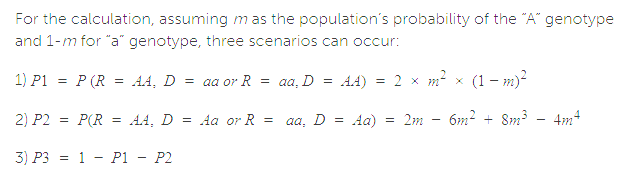
1. Equation for calculating the number of SNPs or Indels required to accurately distinguish donor and acceptor signals.

2. Correlation analysis between sequencing depth and dd-cfDNA detection error rate
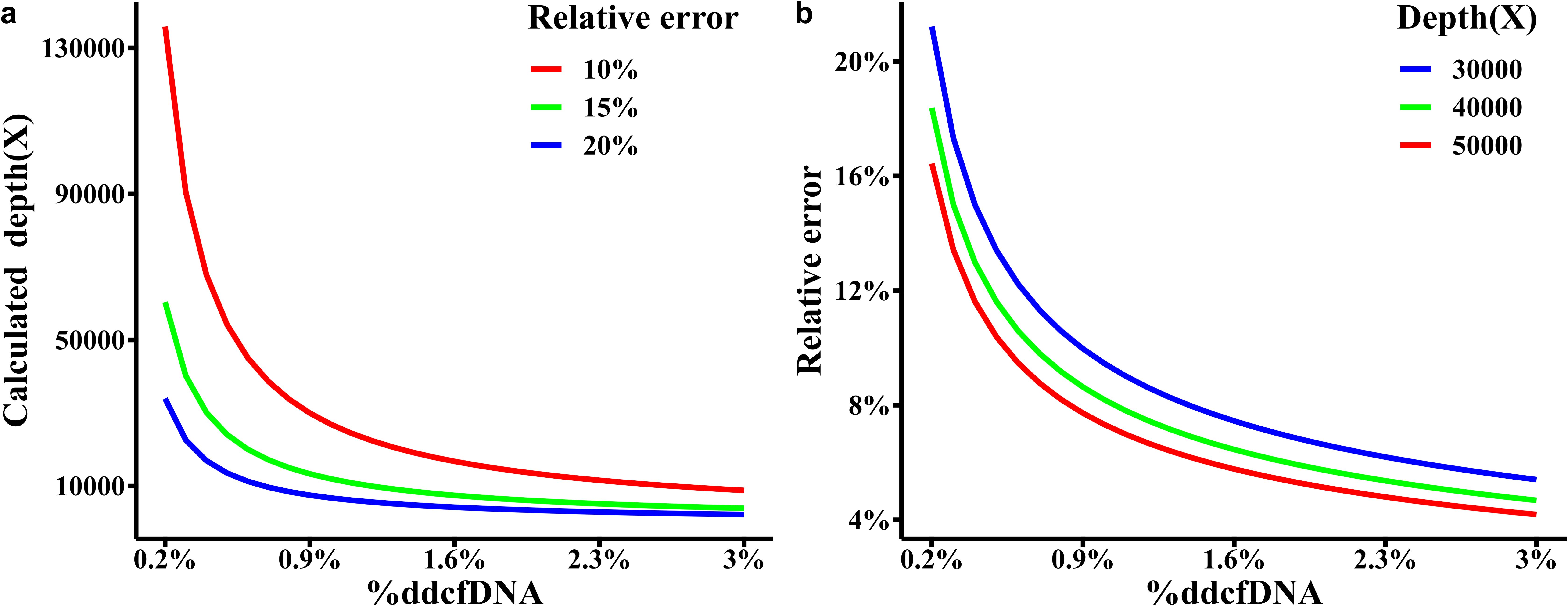
Figure 3. (A) Minimum required sequencing depth and (B) relative errors for %ddcfDNA.
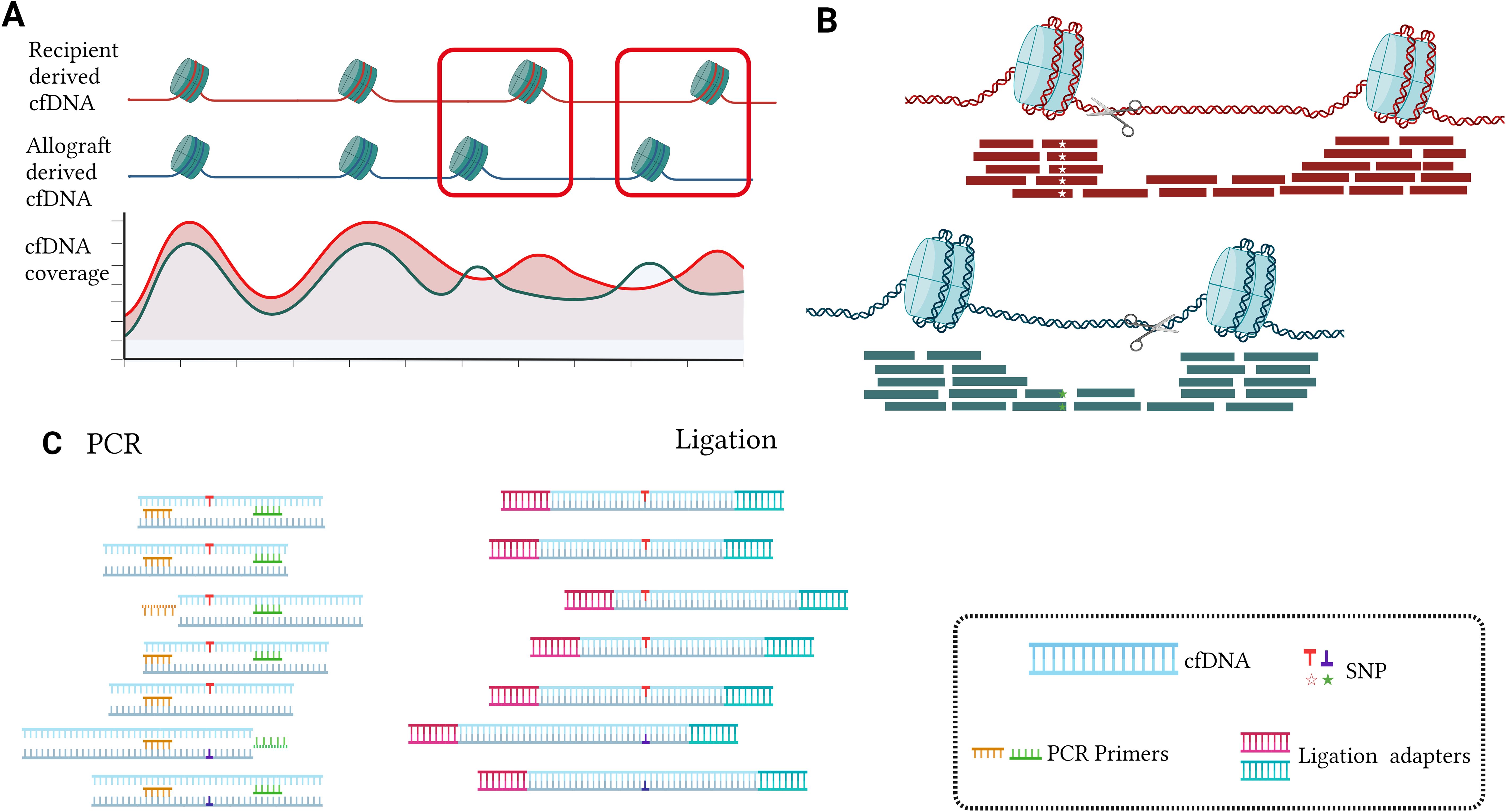
3. The impact of kidney-specific nucleosome imprinting on the critical value of dd-cfDNA detection
4. Comparison of the advantages and disadvantages of relative and absolute values of dd-cfDNA
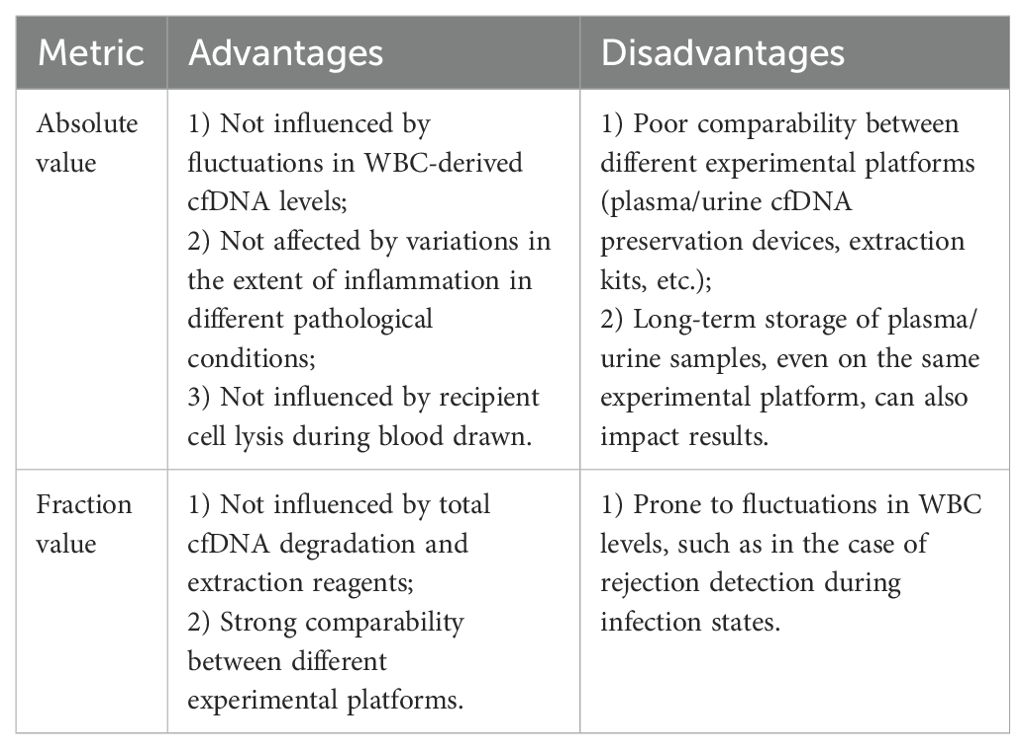
Table 1. Comparison of advantages and disadvantages between absolute and fraction values.
In short, the accuracy of methodological detection is the prerequisite for clinical use of dd-cfDNA. AlloDx took seven years to create Ankang AlloK seq based on 15,000+ samples.®(liquid biopsy solution), with its independently developed ID-Tag technology, it can achieve high-precision detection of low-frequency mutations of one thousandth per thousand at ultra-high sequencing depth by enriching free DNA and reducing background noise interference. As more and more donor-derived cell-free DNA testing specifications are published, I believe that clinicians and kidney patients will have a more systematic and comprehensive understanding of this new transplant immune biomarker, and will be able to make choices that better suit their own needs when faced with various monitoring technologies after transplantation.
Some original figures, videos and downloadable materials are provided in Chinese.