
AlloDx Presents Research Advances at Major Scientific Meetings
In the golden autumn of October, the harvest season, two authoritative academic events in the field of nephrology and organ transplantation in China - the 28th Academic Annual Meeting of the Chinese Society of Nephrology (CCSN 2025) and the 30th Academic Annual Meeting of the Chinese Society of Organ Transplantation (CSOT 2025) were held in Zhengzhou and Changchun. Experts and scholars from all over the country
In the golden autumn of October, the harvest season, two authoritative academic events in the field of nephrology and organ transplantation in China - the 28th Academic Annual Meeting of the Chinese Society of Nephrology (CCSN 2025) and the 30th Academic Annual Meeting of the Chinese Society of Organ Transplantation (CSOT 2025) were held in Zhengzhou and Changchun. Experts and scholars from all over the country gathered together to share fruitful scientific research results, exchange cutting-edge advances in the discipline, and explore clinical diagnosis and treatment experiences.
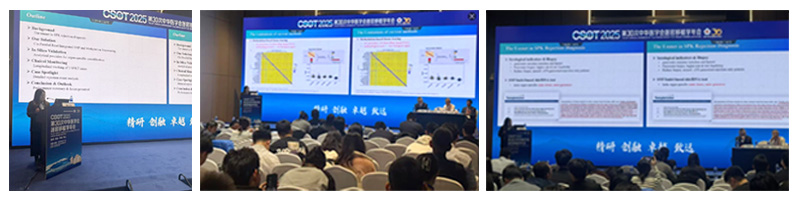
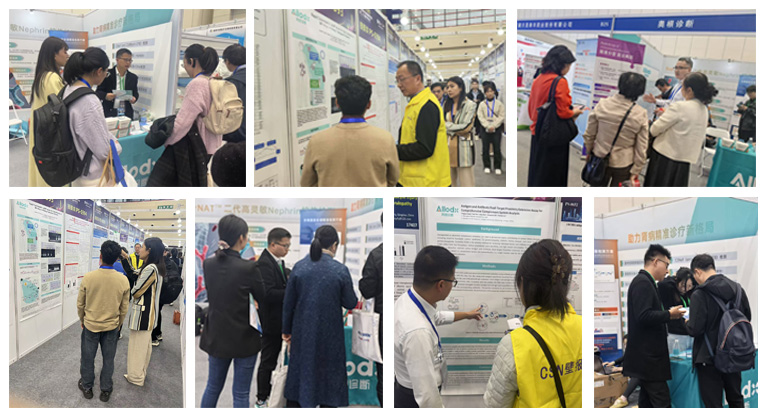
Relying on its years of dedicated accumulation and continuous innovative R&D capabilities in the field of kidney disease, AlloDx presented a number of research results at the two major events, and won the honor of oral report and poster communication respectively.
In the field of organ transplantation, AlloDx is based on its deep accumulation in the direction of donor-derived cell-free DNA (dd-cfDNA). It has not only achieved a breakthrough in domestic detection technology from 0 to 1, but also led it to achieve a leap from "quantification" to "positioning". The company's independently developed second-generation liquid biopsy technology, cPRISM-seq (Cis-Parallel Read Integrated SNP and Methylation Sequencing), can simultaneously capture SNP and methylation dual markers in the same read length, improving the accuracy of traditional traceability analysis by an order of magnitude.
In the direction of kidney disease research, AlloDx also has two notable results. One is the complement system antigen-antibody dual-targeted proximity extension analysis technology (AADT-PEA), which for the first time achieves the simultaneous detection of 11 complement factors and their autoantibodies. It is significantly better than the traditional ELISA method in terms of linear correlation (R² > 0.996) and detection sensitivity, providing an efficient and high-throughput new tool for the accurate diagnosis of complement abnormality-related renal diseases. Another achievement is the BK virus rapid LAMP detection technology. This technology is based on the principle of loop-mediated isothermal amplification (LAMP) and developed a colorimetric method that can complete the detection within 20 minutes. The detection limit reaches 10⁴ copies/μl, which is much faster than the 5 hours required by the traditional method. It provides a fast and sensitive tool for virus monitoring in patients after kidney transplantation, and is helpful for early intervention and protection of transplanted kidney function.
Although the event has come to an end, innovation will never stop. AlloDx will continue to uphold the corporate philosophy of striving for innovation and continue to promote the development and advancement of diagnostic technology in the fields of kidney disease and transplantation.
Some original figures, videos and downloadable materials are provided in Chinese.