
ATC2022 Review: In-depth interpretation of global progress of dd-cfDNA
From June 4 to 8, the five-day American Transplantation Conference (ATC) was held in Boston, USA. The conference had a forward-looking theme of "The Science of Tomorrow Starts Today" and covered many cutting-edge hot spots and latest developments. AlloDx will continue to focus on donor sources for this conference c
From June 4 to 8, the five-day American Transplantation Conference (ATC) was held in Boston, USA. The conference had a forward-looking theme of "The Science of Tomorrow Starts Today" and covered many cutting-edge hot spots and latest developments. AlloDx will continue to focus on the research trends and latest developments in the field of donor-derived cfDNA at this conference.
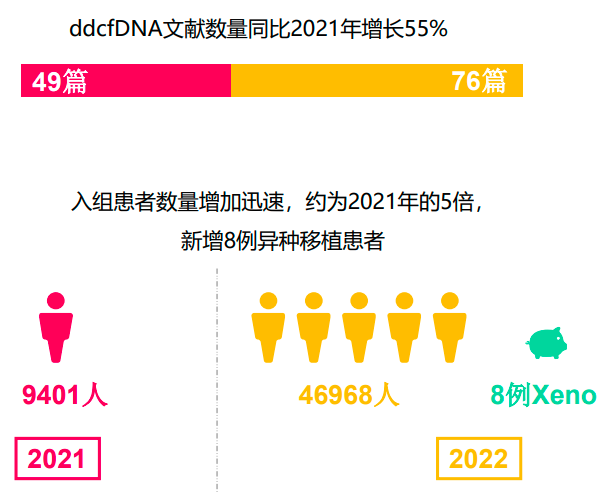
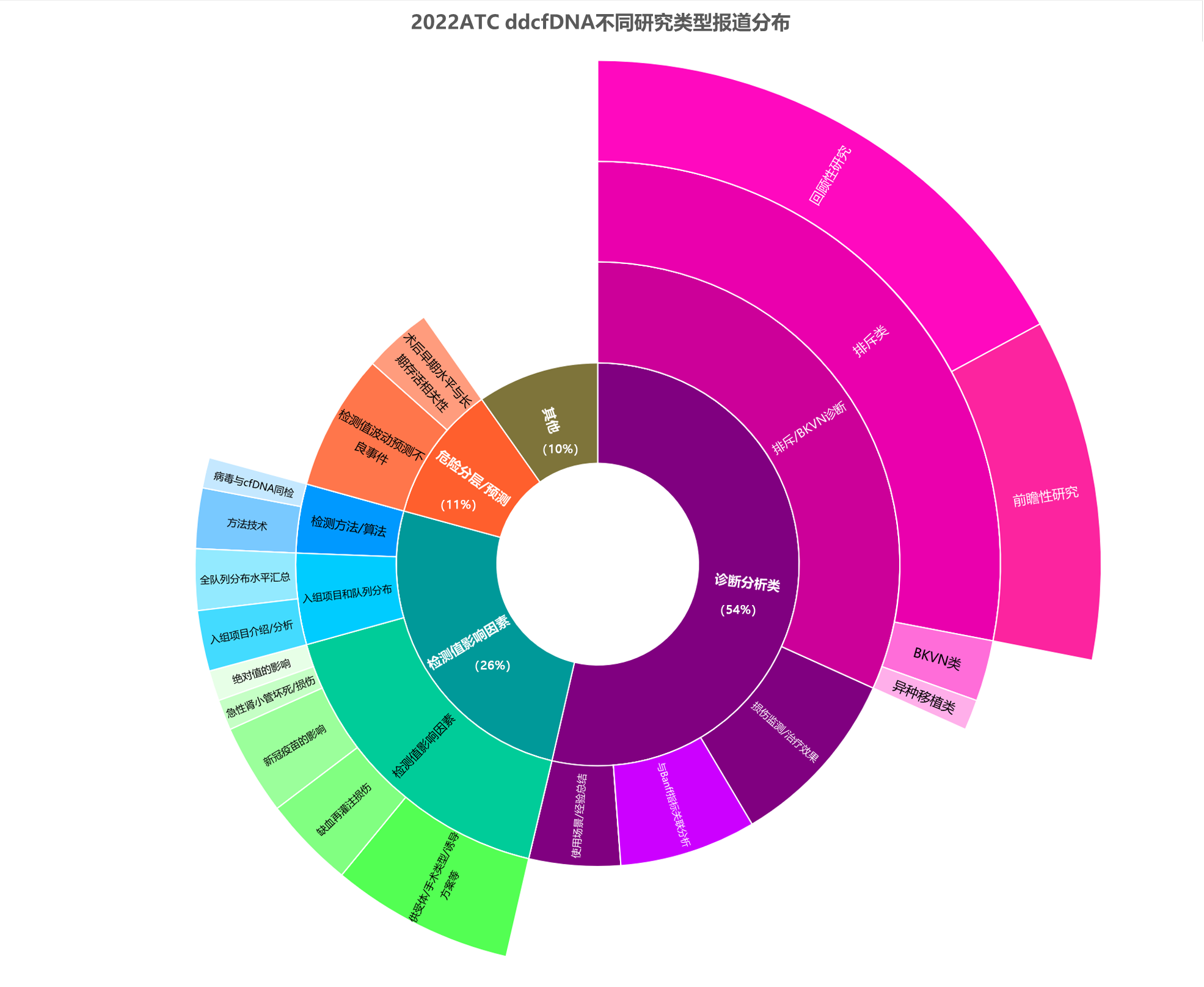
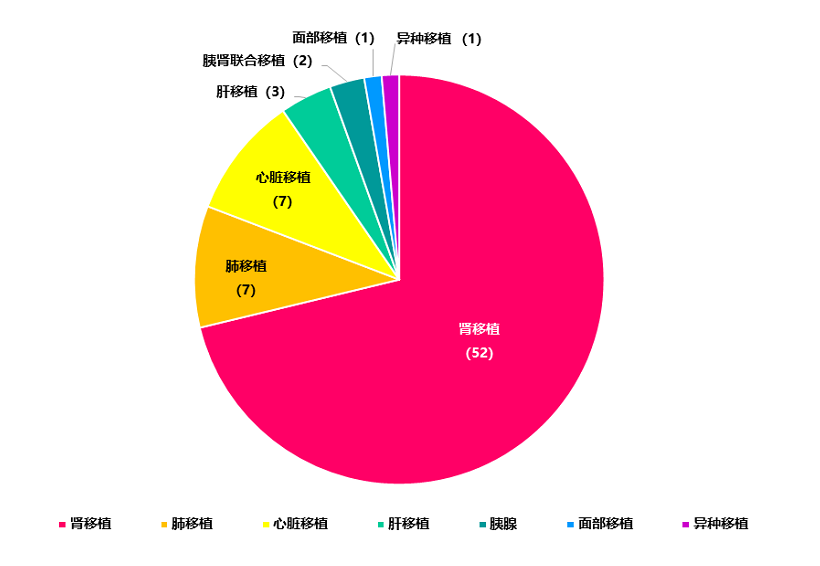
As an emerging biomarker in the field of organ transplantation, donor-derived cfDNA (dd-cfDNA) continues to shine in the research collections of this conference: Judging from the number of research results, this year a total of 10,000 research results have emerged from the United States, Canada, Germany, Brazil and other countries.76ChapterThere are more relevant research reports than last year27Chapter (Figure 1); From the perspective of research direction, as dd-cfDNA moves from theory to clinical practice, research has further deepened into more subdivided areas such as "factors affecting dd-cfDNA detection values", "further correlation analysis with puncture pathology Banff indicators" and "summary of practical clinical use experience" (Figure 2); Judging from the number of enrolled patients, patients enrolled this yearshare46,968Example, about last year’sfive times (Figure 1), larger-scale studies with enrolled samples provide more reference value for clinical use; in terms of types of transplanted organs, kidney transplantation still has the most research literature (52 articles), followed by heart transplantation (7 articles) and lung transplantation (7 articles). Research on dd-cfDNA in xenotransplantation has also begun to be reported (Figure3)。
(Figure 1)
(Figure 2)
(Figure 3)
The editor believes that the influencing factors of dd-cfDNA detection values, further combination with pathological Banff indicators, and clinical use experience/scenarios are new highlights in the field of dd-cfDNA research at this conference. Next, the editor will deeply interpret the research results from these three aspects. Stay tuned!Some original figures, videos and downloadable materials are provided in Chinese.