
Industry Frontier | Am J Transplant magazine research results reveal the similarities and differences between DSA-positive and DSA-negative mABMR at the clinical manifestations, pathological biopsy and molecular level
On May 16, the American Journal of Organ Transplantation (Am J Transplant) published the results of a study online. The study compared the clinical manifestations, pathological biopsy and rejection-related gene expression of DSA-negative (DSA-) and DSA-positive (DSA+) antibody-mediated rejection reactions (ABMR) and found that:
On May 16, the American Journal of Organ Transplantation (Am J Transplant) published the results of a study online. The study compared the clinical manifestations, pathological biopsy and rejection-related gene expression of DSA-negative (DSA-) and DSA-positive (DSA+) antibody-mediated rejection reactions (ABMR) and found that there are differences in the time of occurrence and activity between the two.However, there is no significant difference in the molecular mechanisms involved in graft rejection injury and the risk of loss.
Materials and methods
——————
Through the "INTERCOMEX" international multi-center prospective research project (ClinicalTrials.gov NCT01299168), a total of 396 cases were enrolled from 1,679 samples with biopsy pathological tissue controls (Molecular Microscope Diagnostic System, MMDx) simultaneously confirmed ABMR patients (mABMR), including 148 DSA- and 248 DSA+ patients; in addition, 864 pathologically non-rejection samples were also enrolled as baseline controls.
Research results
——————
The incidence of DSA+ is different in different mABMR stages: the incidence in early-stage ABMR (EABMR) is 56%; in fully-developed ABMR (FABMR), the incidence is 70%; and in late-stage ABMR (LABMR), the incidence is 58%.Overall, DSA- mABMR incidence accounts for 40%, DSA-mABMR patients are usually sensitized patients,60% of patients were PRA positive,There was a significant difference from DSA- non-mABMR patients (p=5.79×10^7).
This historical image is currently unavailable.Open original image

Compared with the mABMR of DSA+, the mABMR of DSA- exhibits the following characteristics:
More likely to show up on histopathology Negative C4d staining (86%);
Indicative pathological biopsy was performed earlier, with DSA- mABMR approximately 1.5 years earlier than DSA+ mABMR (median: 2.4 years vs 3.9 years, p=1.2×10^3);
The activity of mABMR is low, and it also appears early in rejection-related gene expression and histopathology.
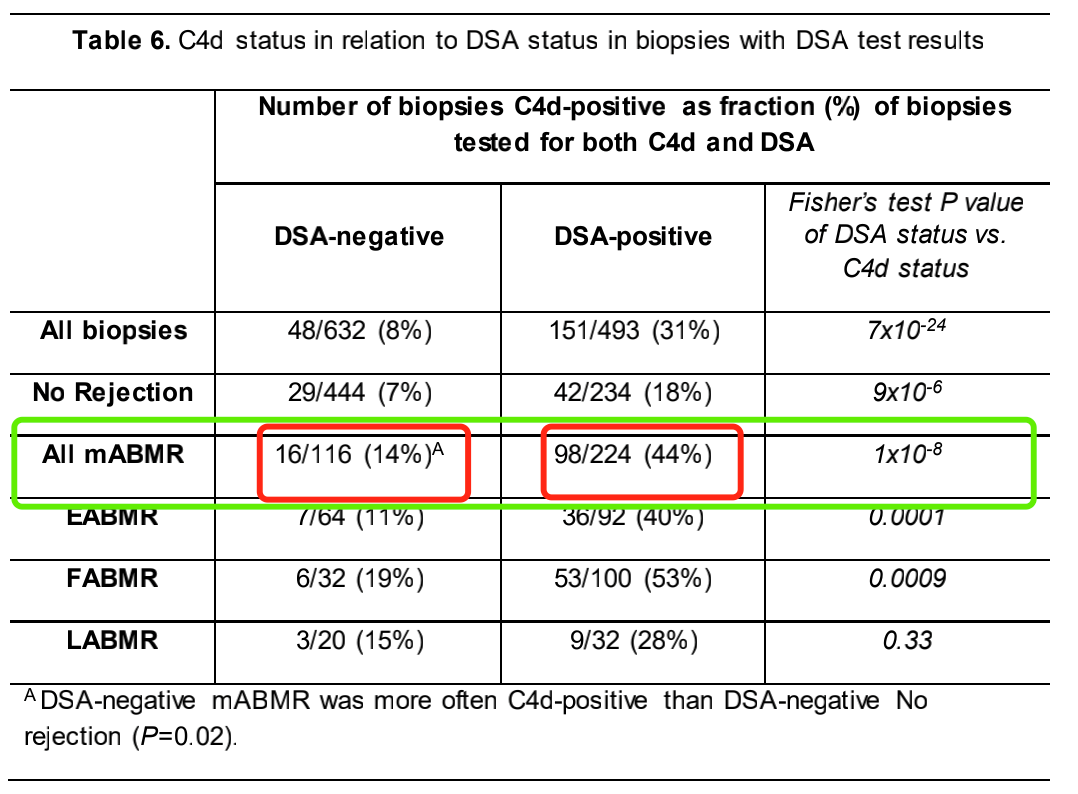
However, in the mABMR of DSA- and DSA+,There is no difference in the transcriptional expression of genes related to the occurrence of rejection, such as NK cell expression-related genes (shaded area in the figure below) and interferon gamma (IFNG)-induced related genes (such as PLA1A and WARS genes, etc.).
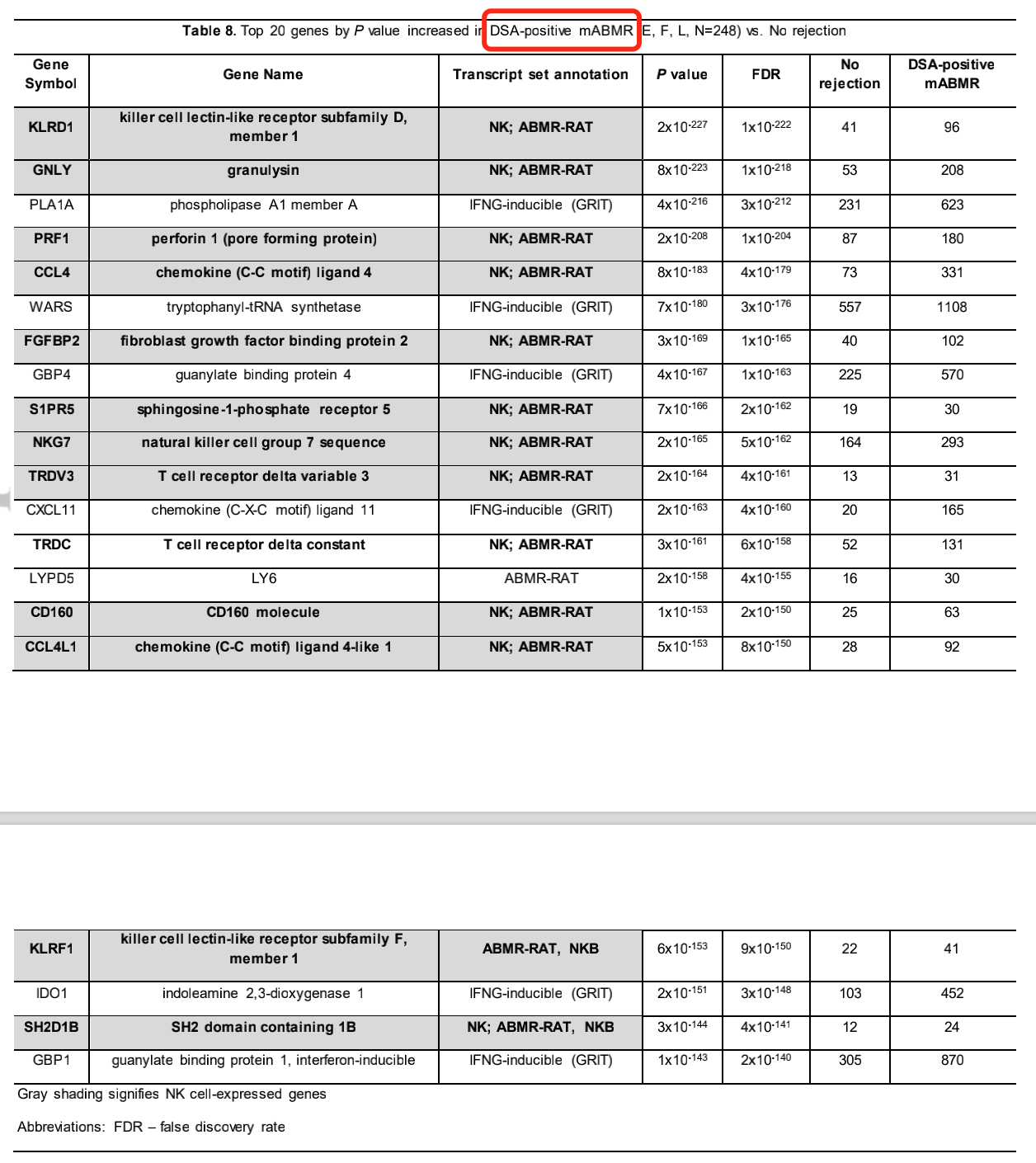
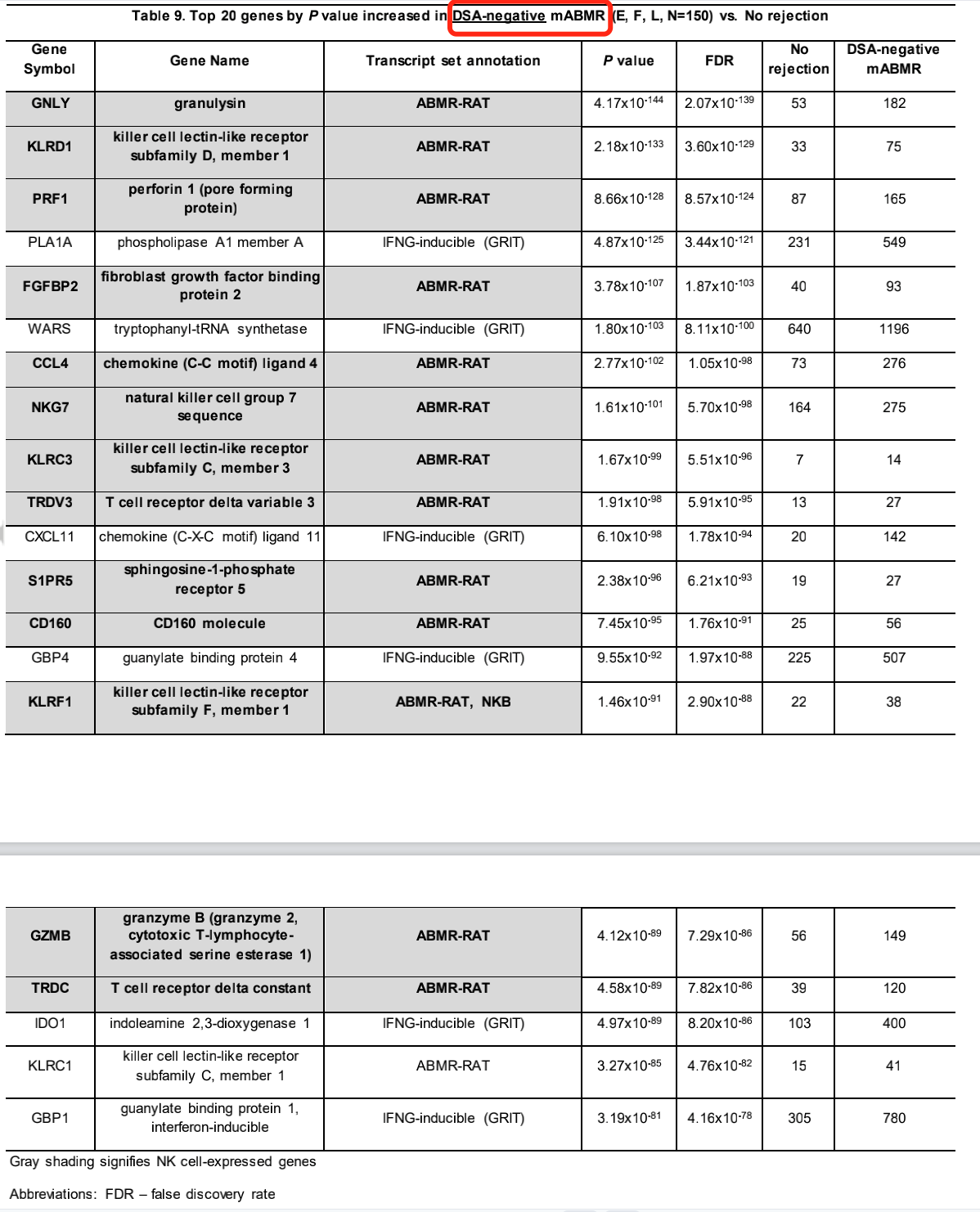
Analysis of the genome-wide expression difference between DSA- and DSA+ mABMR found that only 2 probes (corresponding to the P2RX7 and TM4SF18 genes) out of 49,495 probes had a slightly significant difference (p=0.03), and there was no significant difference in the transcriptional expression of other genes. This difference is related to the lower activity and earlier occurrence time of DSA- mABMR.
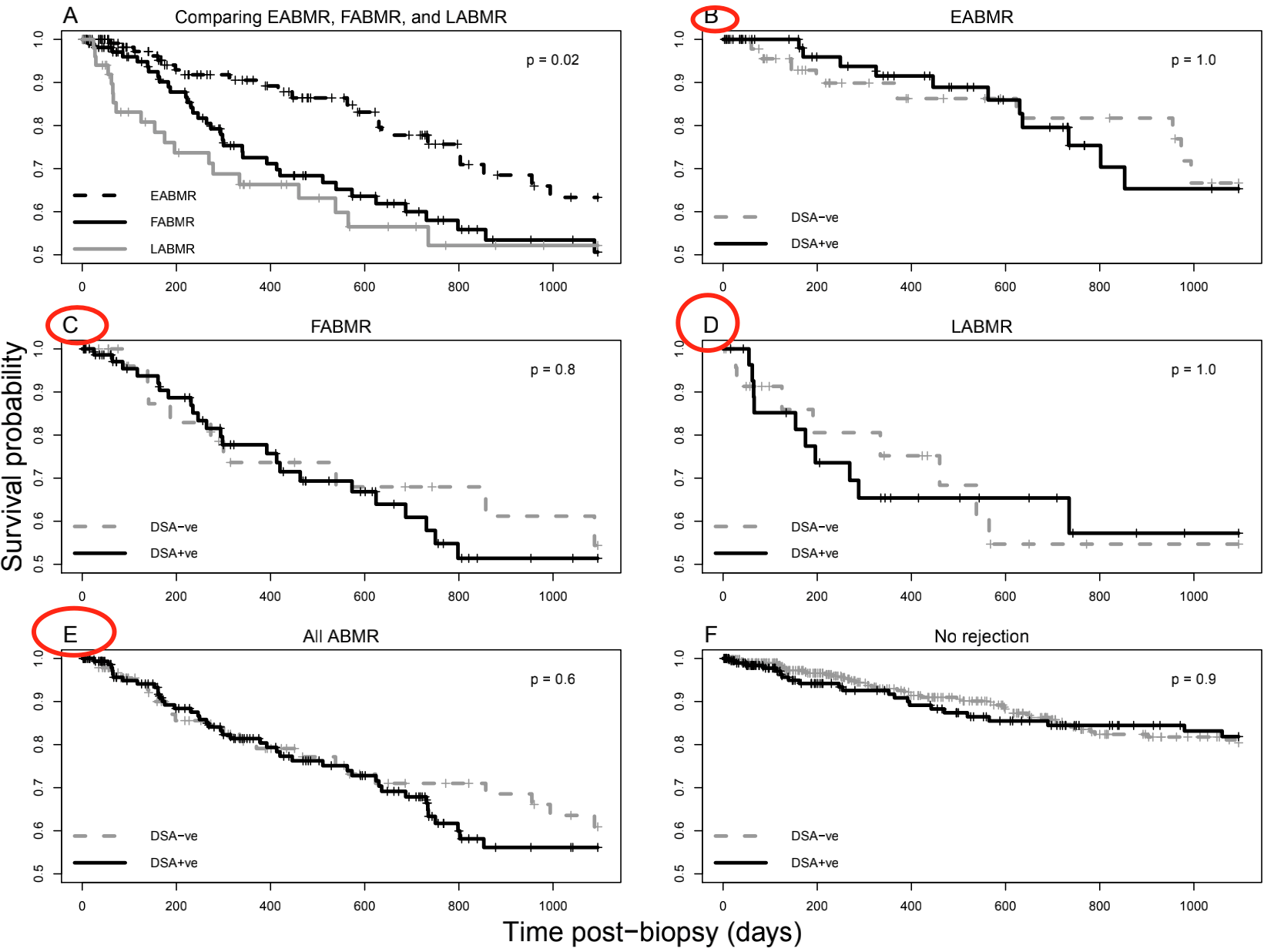
Analysis of differences in three-year transplant kidney loss rates showed that even when different stages of mABMR are distinguished,There was no significant difference in the graft loss rate between DSA- and DSA+ mABMR.
Conclusion
——————
Compared with DSA+ mABMR, DSA- mABMR usually occurs earlier and is pathologically less active.And it usually appears C4d negative, which causes great trouble in the diagnosis of ABMR.However, there is no significant difference in rejection damage and risk of loss of transplanted kidneys. The results of full gene differential expression analysis suggest that the mechanisms involved in rejection damage are also the same.
——
*This article is written byShanghai AlloDx Technology Co., Ltd. Medical DepartmentTranslation
Original link:https://onlinelibrary.wiley.com/doi/10.1111/ajt.17092
Some original figures, videos and downloadable materials are provided in Chinese.