
ATC 2021: dd-cfDNA, Risk Stratification and Prognosis (Part 2)
At present, research on donor-derived cell-free DNA (ddcfDNA) mainly focuses on the diagnosis of rejection, but there are few reports on its use for prognostic factor analysis and risk stratification. This article summarizes the research on ddcfDNA and transplanted kidney eGFR changes, dnDSA production and prediction at this year’s American Organ Transplantation Annual Conference (ATC 2021).
At present, research on donor-derived cell-free DNA (ddcfDNA) mainly focuses on the diagnosis of rejection, but there are few reports on its use for prognostic factor analysis and risk stratification. This article summarizes the research at this year's American Organ Transplantation Annual Conference (ATC 2021) on ddcfDNA and eGFR changes in transplanted kidneys, dnDSA production and prediction of rejection.
Does the ddcfDNA test value one month after transplantation have predictive value?
What is the predictive significance of the ddcfDNA test value one month after transplantation? Robert J, Wake Forest School of Medicine, North Carolina Professor Stratta's team conducted a systematic analysis of the results of a total of 655 patients who underwent procedural renal puncture and ddcfDNA testing one month after surgery and found that the ddcfDNA concentration was higher in patients with multiple transplants (1.8±2.1), high sensitization (1.6±2.0), secondary uterine surgery (0.85±0.9) and combined pancreas-kidney transplantation (0.9±1.1), while it was higher in patients with different types of donors (DCD, LDRT, acute kidney injury, standard and marginal). and patients who developed DGF, the concentration of ddcfDNA one month after surgery was lower and there was no significant difference. Among them, the ddcfDNA detection value of 58 patients with stable biopsy pathology was 0.49±0.4, which was lower than the ddcfDNA detection value of 10 patients with positive biopsy pathology (1.5±1.8).
In predicting the occurrence of rejection, 22 patients with ddcfDNA concentration ≥2.0 1 month after surgery were found to be more likely to develop rejection (50%) after 14 months of follow-up.
Can ddcfDNA be used to predict long-term function of transplanted kidneys?
Long-term low inflammatory infiltration in transplanted kidneys is associated with decreased renal function (eGFR). Professor Tarek Alhamad of Washington University in Louisville and others evaluated whether ddcfDNA can be used as a marker of damage caused by a low-inflammatory state to predict long-term renal function decline.
Among the 219 patients enrolled, it was found that there was a slight negative correlation between ddcfDNA concentration and eGFR in the first year after surgery (R: -0.11), and a more significant negative correlation appeared in 3 years after surgery (R: -0.84). At 10 years after surgery, although one patient was enrolled, the same correlation trend was shown (R: -0.69) (Figure 1).
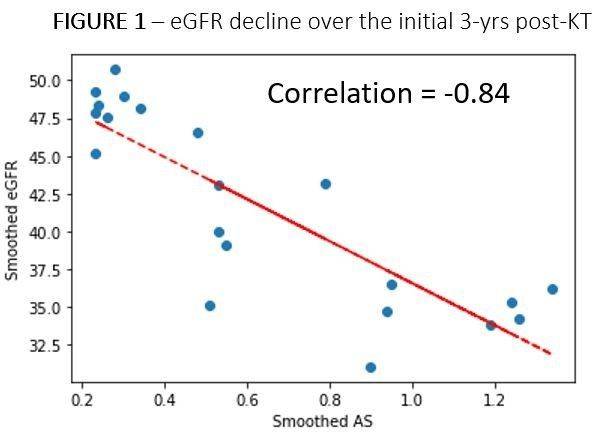 (Figure 1)
This study suggests that although factors affecting eGFR decline are diverse, high ddcfDNA concentration is independently significantly associated with eGFR decline 3 years after transplantation. The continuously elevated ddcfDNA concentration indicates the existence of chronic inflammatory damage in the transplanted kidney. ddcfDNA can not only be used to diagnose acute clinical events, but also to risk stratify the patient's transplanted kidney function.
What is the relationship between ddcfDNA concentration and postoperative dnDSA production?
The increase in ddcfDNA concentration is related to the immune activation of transplanted kidneys, so immune activation-related processes, including leukocyte activation, cytokine release, and the production of neonatal donor-specific antibodies (dnDSA), should all cause an increase in ddcfDNA concentration. Professor GauravGupta and others from the Virginia Commonwealth University Kidney Disease Center evaluated the relationship between ddcfDNA concentration and postoperative dnDSA production.
A study of 961 patients showed that for every 1% increase in ddcfDNA concentration, the risk of developing dnDSA increased by 20%. More notably, ddcfDNA concentration increased 291 days before dnDSA was detected. When the ddcfDNA concentration is higher than 0.5%, it will significantly (p=0.003) increase the risk of dnDSA by 2.57 times (Figure 2).
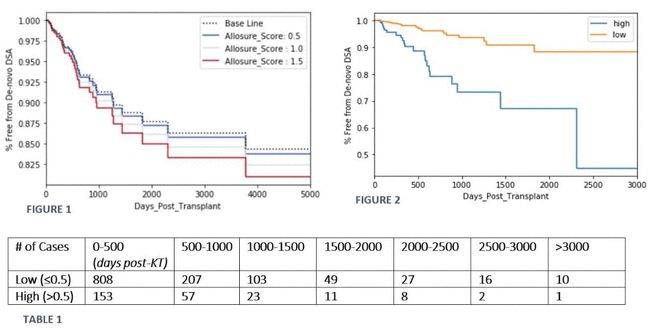 (Figure 2)
Studies have shown that increased ddcfDNA concentration after kidney transplantation increases the risk of later dnDSA, but the reason why ddcfDNA concentration increases earlier than dnDSA requires further exploration.
Can BK virus damage to transplanted kidneys be predicted by detecting blood ddcfDNA concentration?
In the study of BK virus nephropathy, researchers also tried to predict the damage of BK virus to transplanted kidneys by detecting ddcfDNA in the blood.
Professor Akshta Pai and others from McGovern Medical School of the University of Texas in the United States monitored the blood ddcfDNA of 246 patients and showed that there was no significant difference in ddcfDNA concentration between patients with BK loads greater than and less than 10,000 copies (K-W test, p=0.4237). There was also no significant correlation between blood ddcfDNA concentration and PCR copies (R: 0.0088) (Figure 3).
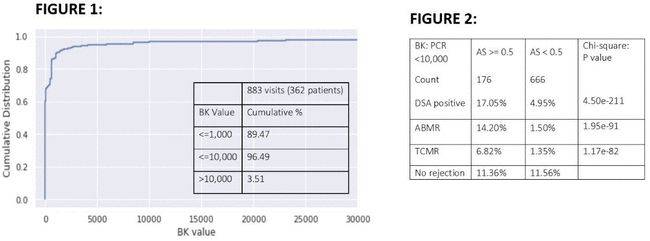 (Figure 3)
A study by Professor Raja Dandamudi's team from the Children's Kidney Center of Washington University in St. Louis on 56 pediatric kidney transplant patients showed that patients with BKuria (0.77% vs. 0.49%) and BKemia (1.24% vs. 0.50%) within one year after surgery had higher ddcfDNA concentrations (since the significance was not stated, the author believes that the difference is not significant).
When the correlation with BK copy number was analyzed, ddcfDNA concentration rising to 0.80% (95% confidence interval [CI] 0.3 to 1.28%) was significantly associated with the occurrence of blood BK (p=0.0014) but not with urinary BK (p=0.06).
In the process of adjusting medication in 5 patients with BK viremia, when the blood BK turned negative, the blood ddcfDNA concentration would drop rapidly (Figure 4). This is consistent with the theory that substantial kidney damage occurs only when blood BK is positive. Only when BK viremia is high will BK-related kidney transplant damage occur.
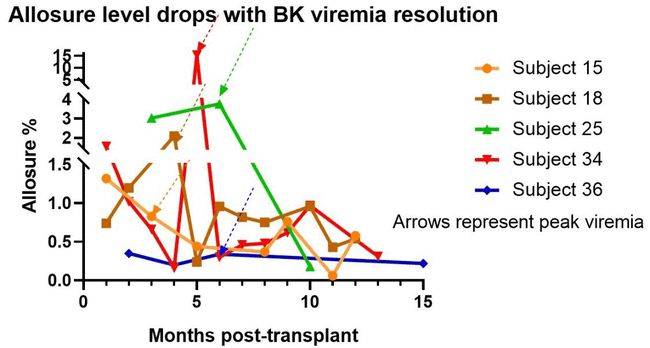 (Figure 4)
When blood BK is low, ddcfDNA concentration is associated with rejection-type kidney damage. For example, Professor Akshta Pai analyzed patients with blood BK <10,000 copy number and found that blood ddcfDNA (>0.5%) concentration was significantly related to DSA and the occurrence of rejection reactions (ABMR and TCMR). Therefore, he believed that pure blood ddcfDNA was not significantly related to the risk of BK virus nephropathy, but it can be used as a tool to monitor the occurrence of rejection reactions after BK medication.
Some original figures, videos and downloadable materials are provided in Chinese.